The Board Report
Why Executive Personality Is Becoming a Competitive Advantage
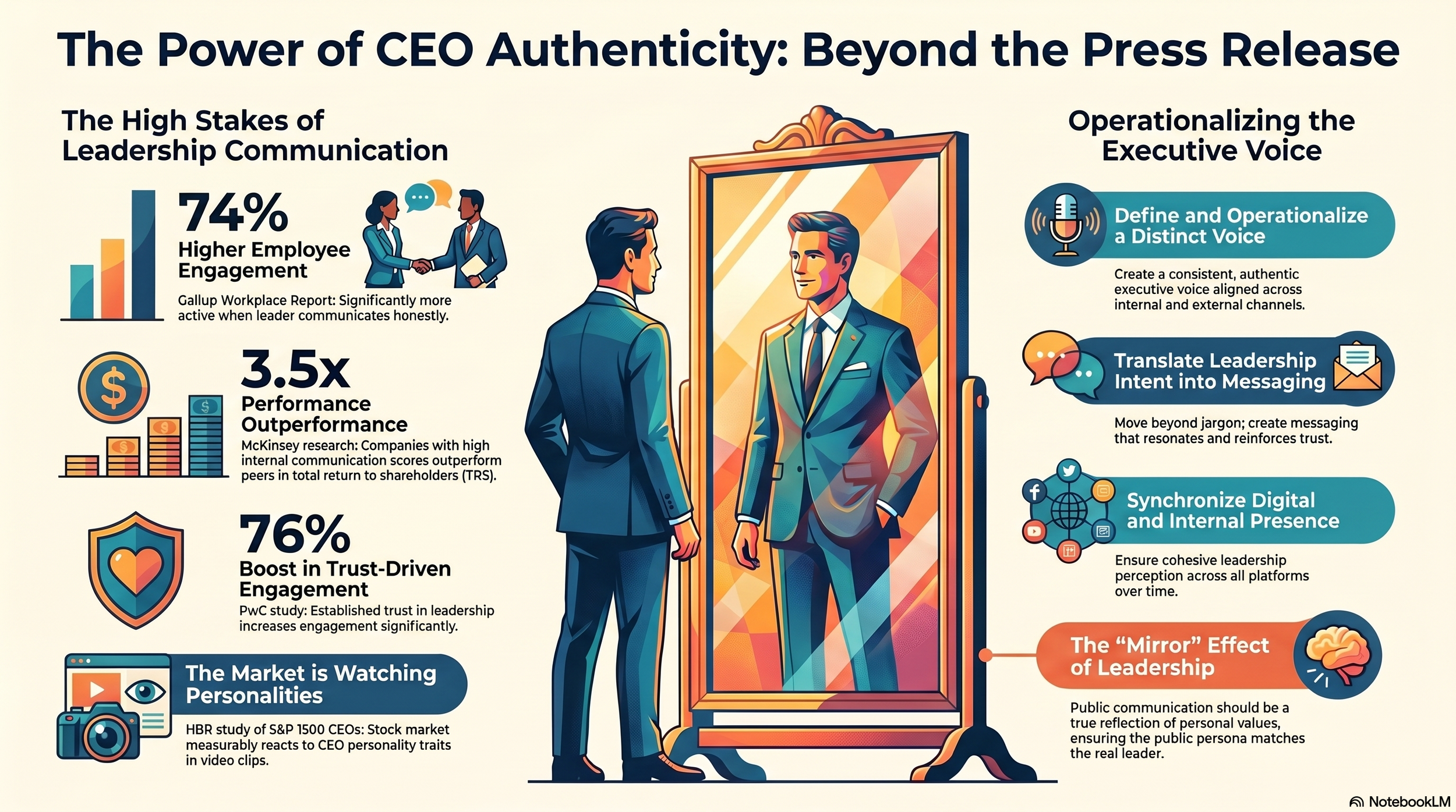
CEO credibility is not built by polishing every sentence until it sounds safe. It is built through a strong and unique voice, a clear point of view, and communication that reflects how the executive actually thinks.
Our upcoming workshop, How to Make Your CEO Sound Like a Leader (Not a Press Release), will help communicators move beyond generic executive messaging and build CEO content with personality, substance, and strategic clarity.
May 15 | Live Workshop
New Chief Influencer® Episodes Are Now Available
Our latest Chief Influencer® episodes feature conversations with leaders shaping institutions, industries, and public dialogue.
Mike Graglia, CEO of Cure SYNGAP
Listen to the episode→Peter Goettler, CEO of Cato Institute
Listen to the episode→Paul R. Lawrence, Deputy Secretary of the U.S. Department of Veterans Affairs
Listen to the episode→
Explore our latest Chief Influencer® award winners
Chief Influencer® is a programsponsored by The Communications Board that was created in 2023. It is designed to recognize senior leaders whose influence extends beyond title or role and is demonstrated through sustained impact, credibility, and strategic communication.
Industry Highlights
CEO Anger Can Backfire in Crisis Communication
A new Public Relations Review study finds that product-harm crises trigger stronger punishment expectations and lower forgiveness than moral-harm crises. The study also found that when CEOs express anger in product-harm crises, audiences may perceive them as more arrogant and less sincere.
Implication: CEO emotional tone is not just style. In high-stakes crisis moments, communicators must manage not only what the CEO says, but how the CEO’s attitude is likely to be interpreted.
CEO Promises Build Credibility, But Limit Flexibility

Photo by Andrew Petrov / Unsplash
Research from Duke University’s Fuqua School of Business finds that CEOs use promises to build legitimacy and confidence, but they become more vague during uncertainty to preserve flexibility and avoid the consequences of overpromising.
Implication: The strongest executive communicators know when specificity builds trust and when disciplined ambiguity protects credibility. CEO messaging should set expectations without trapping the organization into promises it cannot control.
Analysts Reward Strategy Communications That Matches Expectations
A Strategic Management Journal study finds that when executives communicate growth strategies, analysts become more curious and analytical. But the market response depends on fit: growth messaging is rewarded when it aligns with how analysts already understand the company’s value story and punished when it violates expectations.
Implication: Executive communication must align with the organization’s strategic identity. A compelling message can still create risk if it conflicts with how investors believe the company creates value.
Athletics Leadership Is Becoming a CEO-Level Governance Question
A University of South Florida case study argues that major college athletics increasingly resembles an enterprise-level business function, requiring governance, revenue strategy, risk management, and operational leadership beyond the traditional athletics director model.
Implication: Titles alone do not transform institutions. But language can signal whether an organization understands the complexity of the role it is asking leaders to perform.
Thank you for reading this month’s The Board Report. Forward to a colleague, share feedback, and stay tuned for next month’s research roundup.
© 2026 The Communications Board