The Board Report
The Internet Doesn’t Actually Want Authentic CEOs

Photo by Andrii Kordis / Unsplash
The reaction to McDonald’s CEO Chris Kempczinski’s viral video revealed less about the CEO and more about the communications industry itself.
Much of the critique mislabeled the moment as “inauthentic” or “overly corporate.” But the data told a different story: the content drove awareness, engagement, and measurable business impact.
The real takeaway is not about one CEO. It is that as an industry, we are still far from understanding executive communications, authenticity, and performance.
Influence Through Action, Not Over-Planning
In this month’s featured Chief Influencer® episode, Zapier CEO Wade Foster discusses how leaders can be influential by creating environments where people work differently, think differently, and create differently.
Explore more episodes featuring Chief Influencer® award winners
Chief Influencer® is a program sponsored by The Communications Board that was created in 2023. It is designed to recognize senior leaders whose influence extends beyond title or role and is demonstrated through sustained impact, credibility, and strategic communication.
Industry Highlights
Padilla Study: Leadership Speed Is Outpacing Employee Alignment
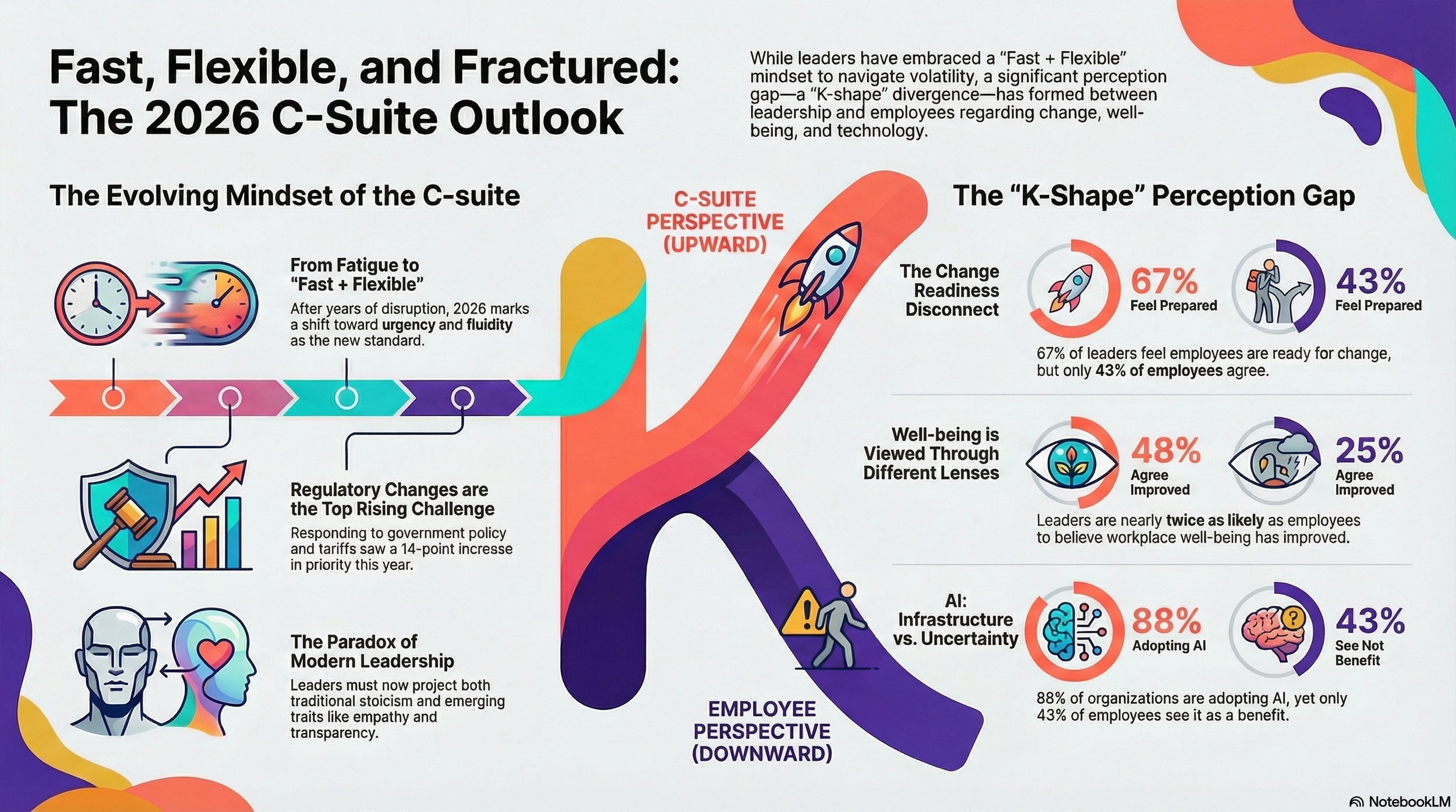
Padilla’s latest research finds that while leaders are moving quickly through uncertainty, employee alignment is not keeping pace. The gap is not one of strategy—it is one of understanding, clarity, and communication.
In Practice: Execution risk is increasingly a communication problem. CEOs and leadership teams must translate strategy into consistent, understandable messaging that aligns employees with direction, trade-offs, and priorities.
Cornell Research: “Corporate Speak” Signals Leadership Weakness
Research from Cornell University finds that individuals more receptive to vague, jargon-heavy corporate language tend to exhibit weaker analytical thinking and leadership capability.
In Practice: Overly abstract or inflated executive messaging is not neutral. This jargon can degrade decision-making and organizational clarity. CEOs must prioritize precision and substance over rhetoric in leadership communication.
Why CEOs Step Into Political Controversies
New research shows the strongest pressure for CEOs to take public positions comes from internal stakeholders, specifically employees and senior leaders—not external audiences. Internal pressure can sometimes create blind spots that can damage brand equity and financial performance.
In Practice: To avoid costly missteps, organizations must clarify the role of personal ideology in business decisions, equip leaders to recognize internal bias, and rigorously assess the full spectrum of consumer views before engaging in political controversies.
Thank you for reading this month’s The Board Report. Forward to a colleague, share feedback, and stay tuned for next month’s research roundup.
© 2026 The Communications Board